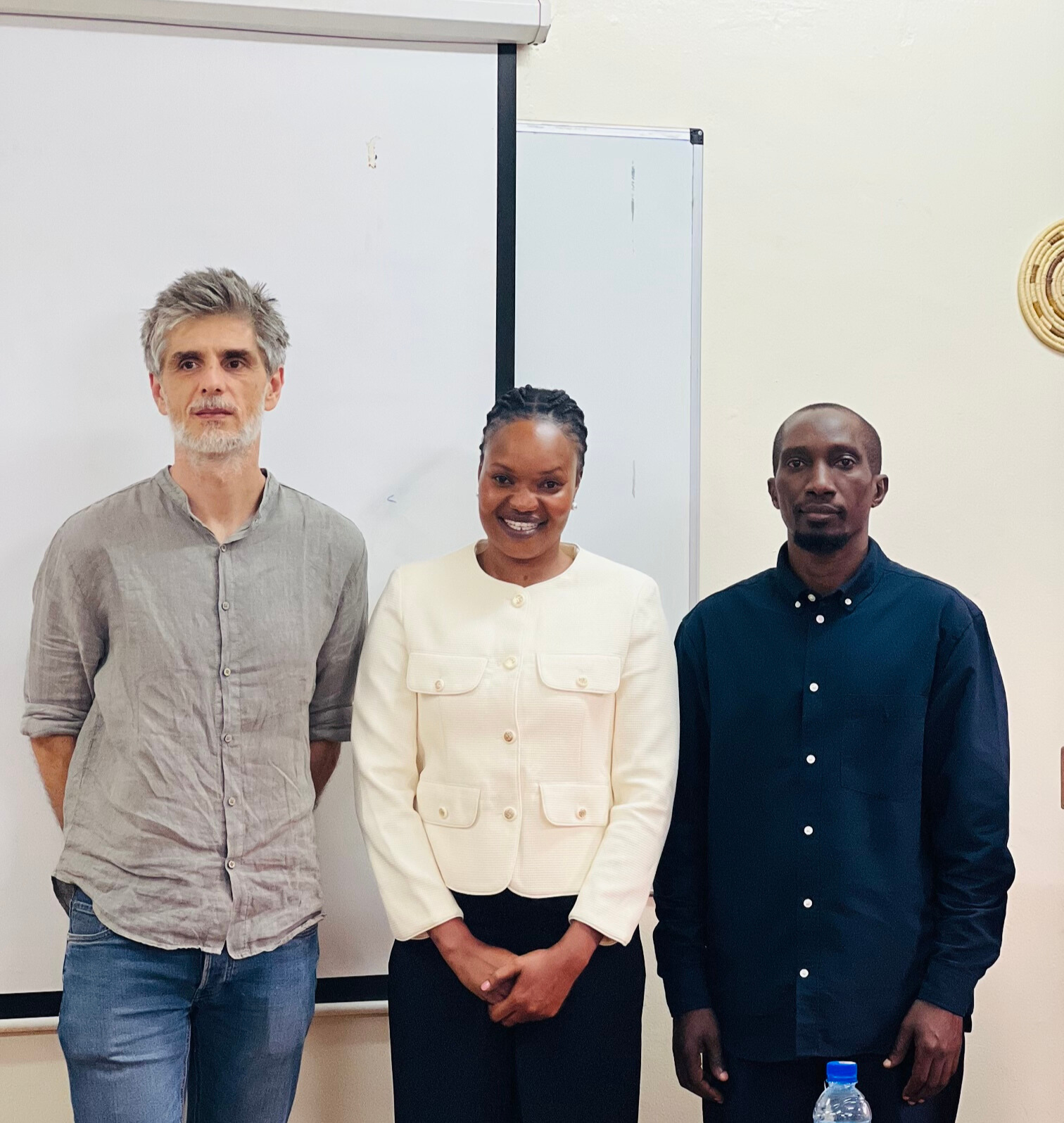
Ms. Olive Lomokol successfully defended her Doctor of Philosophy (PhD) thesis at the Makerere Institute of Social Research (MISR) on Tuesday, 20 January 2026, from 3:00 to 6:00 p.m., at MISR Seminar Room 1 and via zoom. The public defense marked an important scholarly intervention in long-standing debates on violence, governance, and pastoralism in Uganda’s Karamoja region.
Her dissertation, titled “Shifting Perspectives on ‘Pastoral Violence’: the Persistence of the ‘Karamoja Problem’ in Uganda,” critically interrogates the historical and political construction of what has come to be known as the “Karamoja Problem.” Challenging dominant academic and policy narratives, the study argues that pastoral mobility, cattle raiding, and violence have been misrepresented as inherent cultural traits, rather than understood as outcomes of colonial and postcolonial governance.
The thesis advances the argument that the “Karamoja Problem” is a political invention shaped by decades of criminalization, disrupted pastoral institutions, contested sovereignty, and militarized state control. It conceptualizes violence not as pathology, but as a political language emerging from historical dislocation and struggles over authority.
Adopting a qualitative and decolonial methodology, Ms. Lomokol treats archives, oral histories, and ethnography as situated and contested texts. Central to the analysis is a sustained engagement with Karamoja’s own political and knowledge systems, including concepts such as Arem, Asapan, Alomar, and Akiwor. The study reconstructs precolonial distributions of power among elders, women’s institutions, and warrior formations, demonstrating how these structures regulated social order and moral economies.
The research further shows how colonial and postcolonial interventions through the suppression of cultural practices, destabilization of governance institutions, and criminalization of raids reshaped authority and agency. These disruptions, the study argues, gave rise to new forms of resistance, including women’s political action and the emergence of Alomar as an anti-colonial warrior formation.
The thesis makes significant theoretical, empirical, and policy contributions. It challenges state-centric and criminalizing approaches to violence, foregrounds historically marginalized actors and institutions, and highlights the limits of militarized interventions in Karamoja. By centering pastoral realities and indigenous categories of thought, the study offers policy-relevant insights grounded in the region’s political, cultural, and historical contexts.
Professor Tim Mitchell of Columbia University, New York, served as the external opponent whereas Dr. Yahya Sseremba chaired the session. The thesis was supervised by Professor Mahmood Mamdani (Columbia University), Dr. Joseph Kasule (MISR), and Dr. Andrea Cassatella (MISR).
Ms. Lomokol’s successful defense underscores MISR’s continued leadership in critical, decolonial, and interdisciplinary research, and contributes substantively to rethinking pastoralism, violence, and governance in Africa.